
The formula
The right pump for the application.
For a heavy, armor-plated boat running rocky, shallow rivers, that’s large, heavy-duty impellers with thick blades, in pumps built to move serious water volume. The rest of this page is why.
Five impellers, side by side
Pictured here are five impellers from some of the most common jet propulsion systems in shallow-water boating:
| Propulsion system | Engine |
|---|---|
| Southern Jet 216 | V8 |
| Mercury 250 Outboard Jet | V8 |
| Mercury 200 Sport Jet | V6 |
| Mercury 150 Outboard Jet | 4-cylinder |
| Rotax 300 (jet ski) | 3-cylinder |
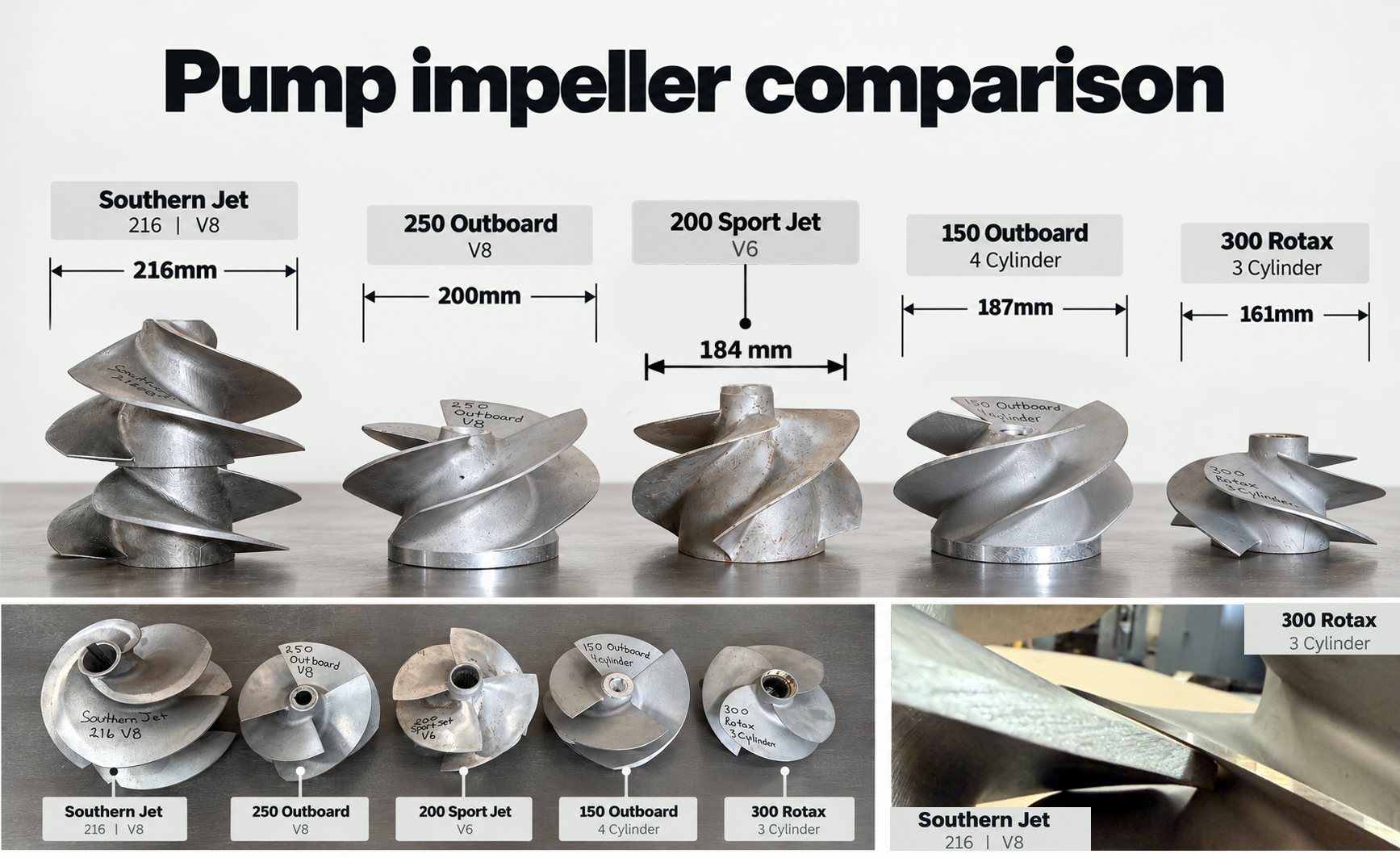
Set them side by side and the differences are hard to miss: diameter, blade thickness, and how much metal sits behind each blade. Those differences are not cosmetic. They shape how a boat performs the day you buy it, and how it holds up multiple seasons into running rocky rivers.
Your jet pump is really a transmission
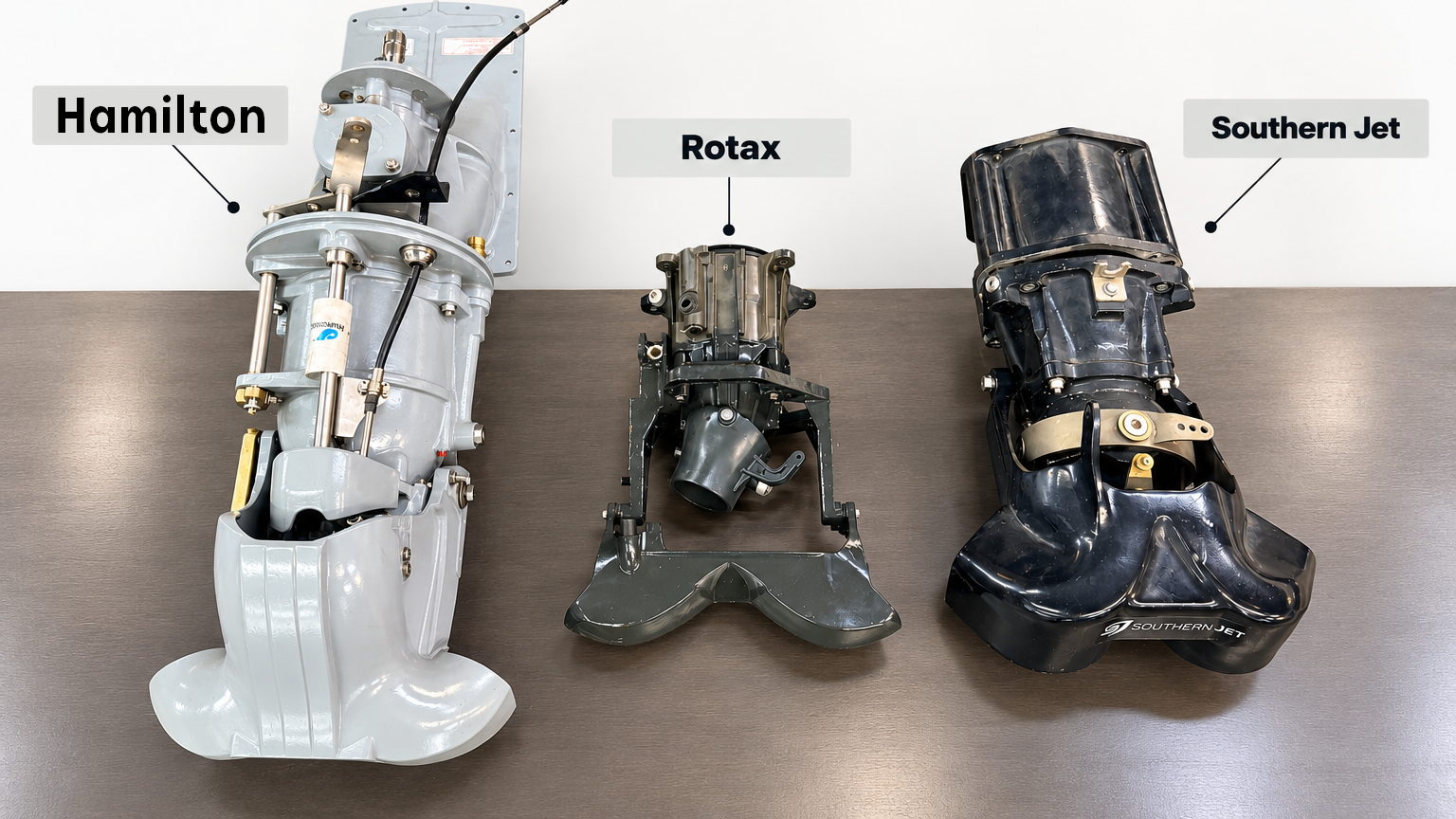
An engine makes power. The jet pump’s only job is to turn that power into thrust. It pulls water in through the intake, accelerates it with the impeller, and pushes it out the nozzle.
That makes the pump your boat’s transmission. And like a transmission, it has to suit the load: a sports car’s gearbox won’t last long in a dump truck. It can also slip.
When a pump loses efficiency from wear or damage, the first sign usually isn’t a noise. It’s a feeling. You get on the throttle, the engine revs, and the boat doesn’t go with it. You get hesitation, a mushy surge, sometimes a hollow rumble underfoot.
That sensation is cavitation. Instead of getting a clean bite on solid water, the impeller is spinning through air and churned-up water.
Anyone who has driven a car with a slipping clutch knows the feeling: plenty of noise, not much forward progress.
Volume vs. velocity: two ways to make thrust
Think about a garden hose. Open the end and you move a lot of water, but it comes out slow. Put your thumb over it and the water screams out fast, but there’s far less of it.
Jet pumps work on the same trade-off.
Volume
The open hose · a large pump
Built to move a big volume of water at lower velocity.
Velocity
Thumb over the hose · a smaller pump
Generally has to spin faster and throw a smaller amount of water much harder to make comparable thrust.
Neither approach is wrong. They’re built for different jobs. That’s the formula: the right pump for the application.
Pushing a lightweight jet ski across open water is a very different task from pushing a heavily built, armor-plated aluminum boat up a shallow river. Heavy hulls want volume: a big, steady column of water to get up and stay on plane, especially loaded down with people and gear. That’s the job a larger pump is designed for.
In a rocky river, material is protection
Run skinny water long enough and the pump is going to eat something. Gravel, sand, a rock you never saw coming. It isn’t a question of if.
The manufacturers know it, too. Sea-Doo’s own owner guidance tells jet ski riders to stay out of shallow water entirely:
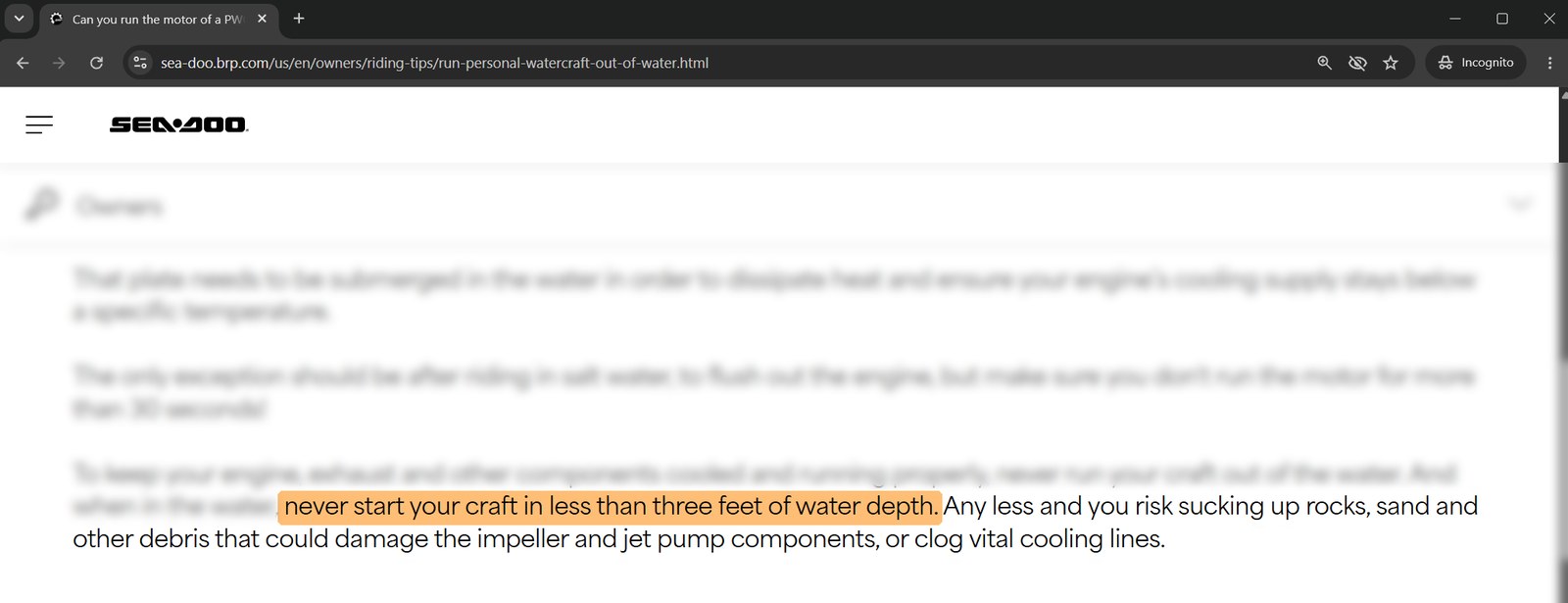
The same page warns that anything shallower risks pulling rocks, sand, and debris into the pump, where they can damage the impeller and pump components or block cooling passages.
That’s sound advice for a jet ski on a lake. But three feet of water is a luxury most river runners don’t have. We build boats for the water that warning is about.
So what happens when the pump does swallow a rock depends largely on how much metal is behind the blade.
Look closely at the photos and compare the impellers on blade thickness and overall mass. A big, heavy-duty impeller with thick blades has material to spare. It can take a hit, shrug it off, and keep working. A smaller impeller with thin blades has far less to absorb that same impact.
All else being equal, thin blades bend, chip, and deform more easily. And a bent blade doesn’t just look rough. It costs you thrust every minute the engine is running. In a rocky river, thick blades aren’t overkill. They’re part of the formula for that application.
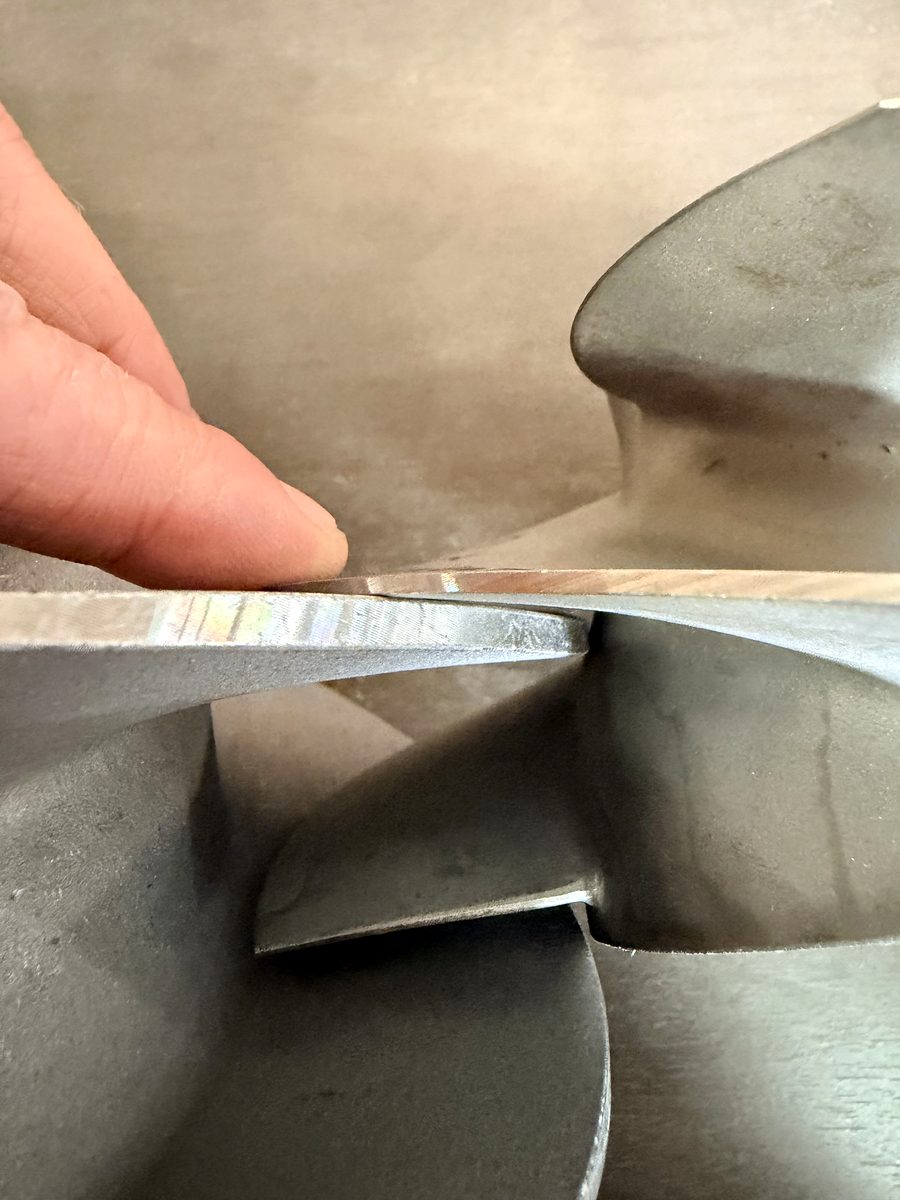
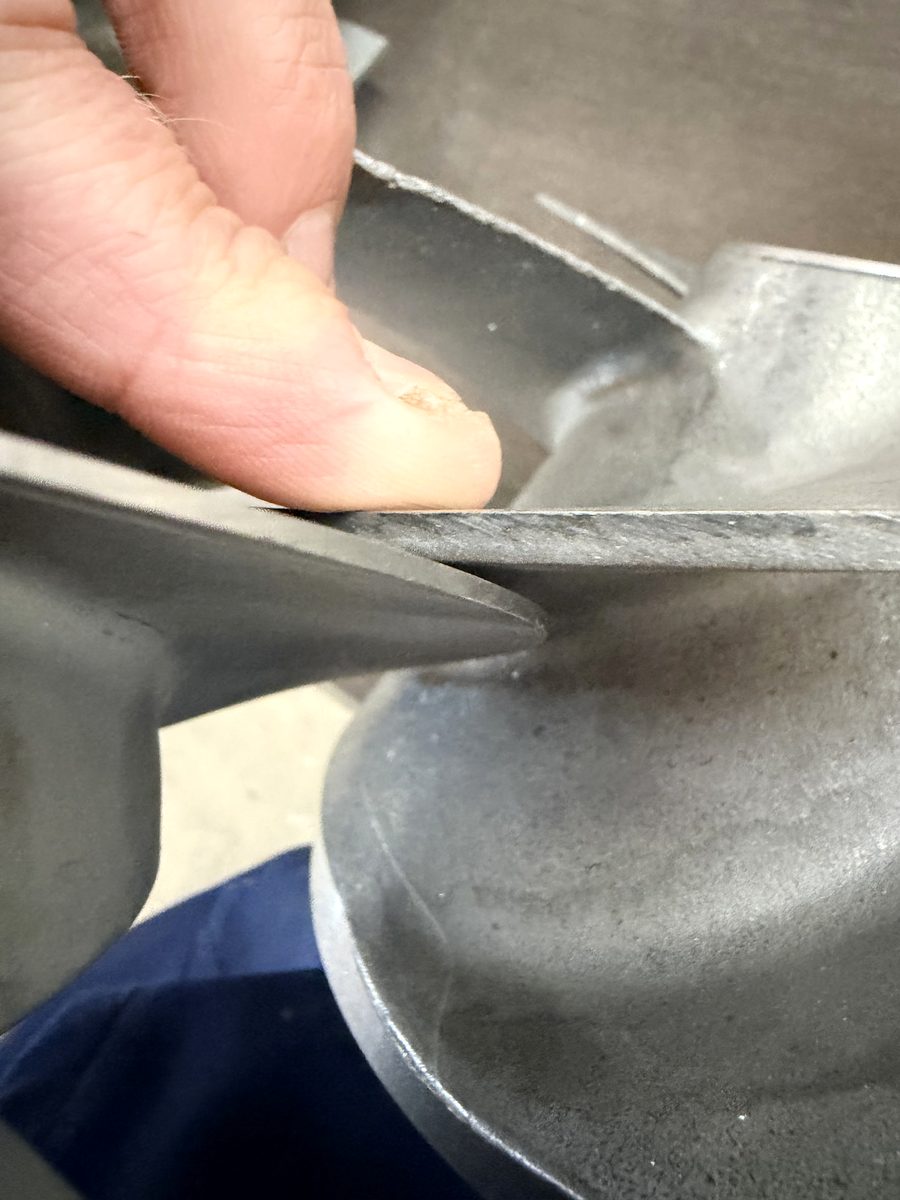
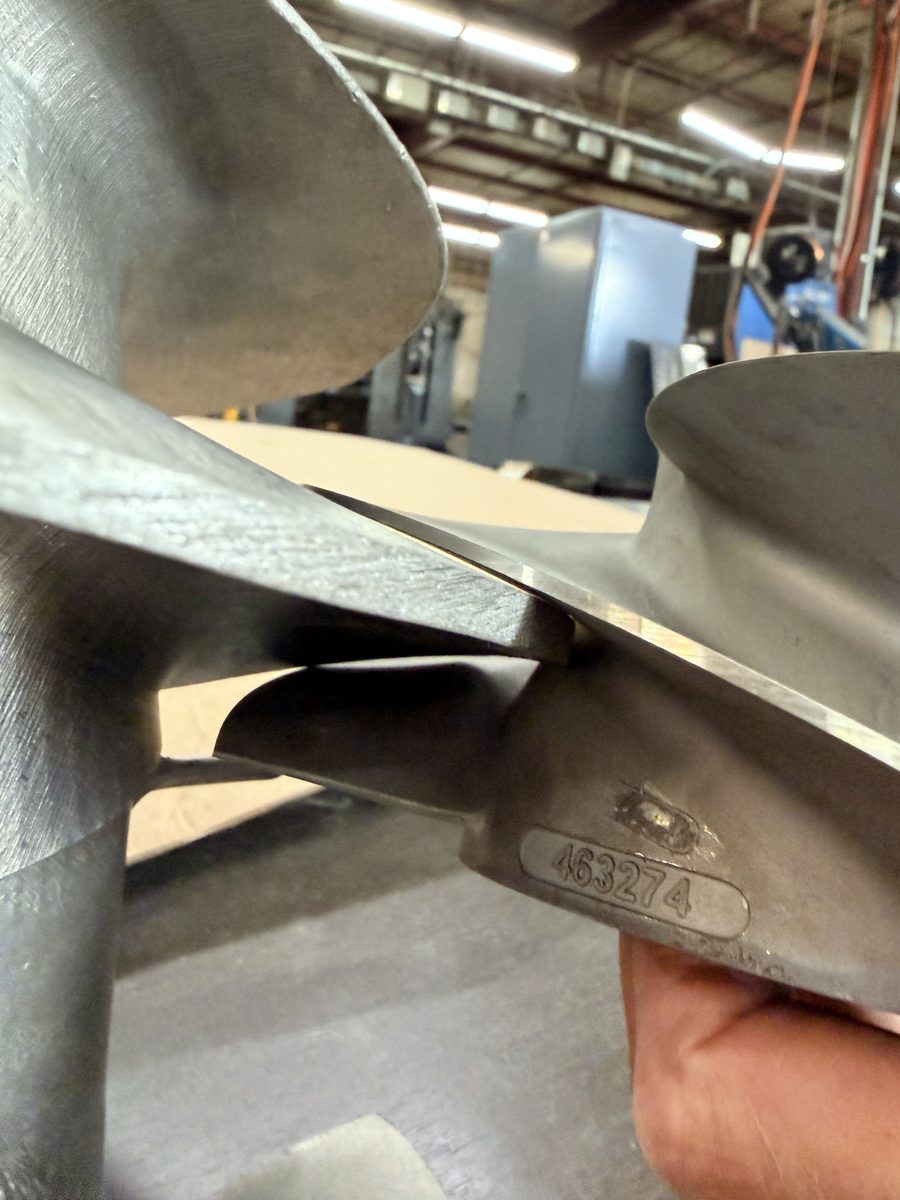
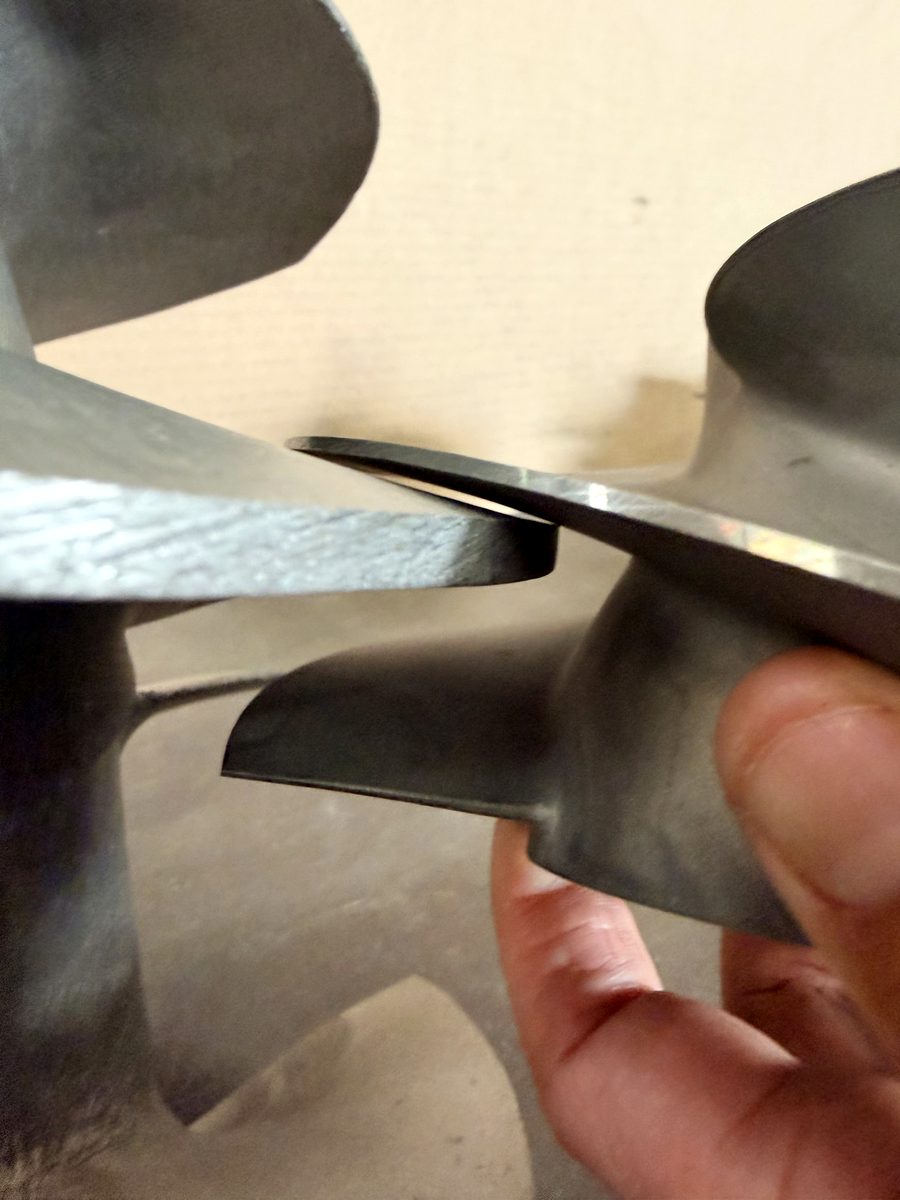
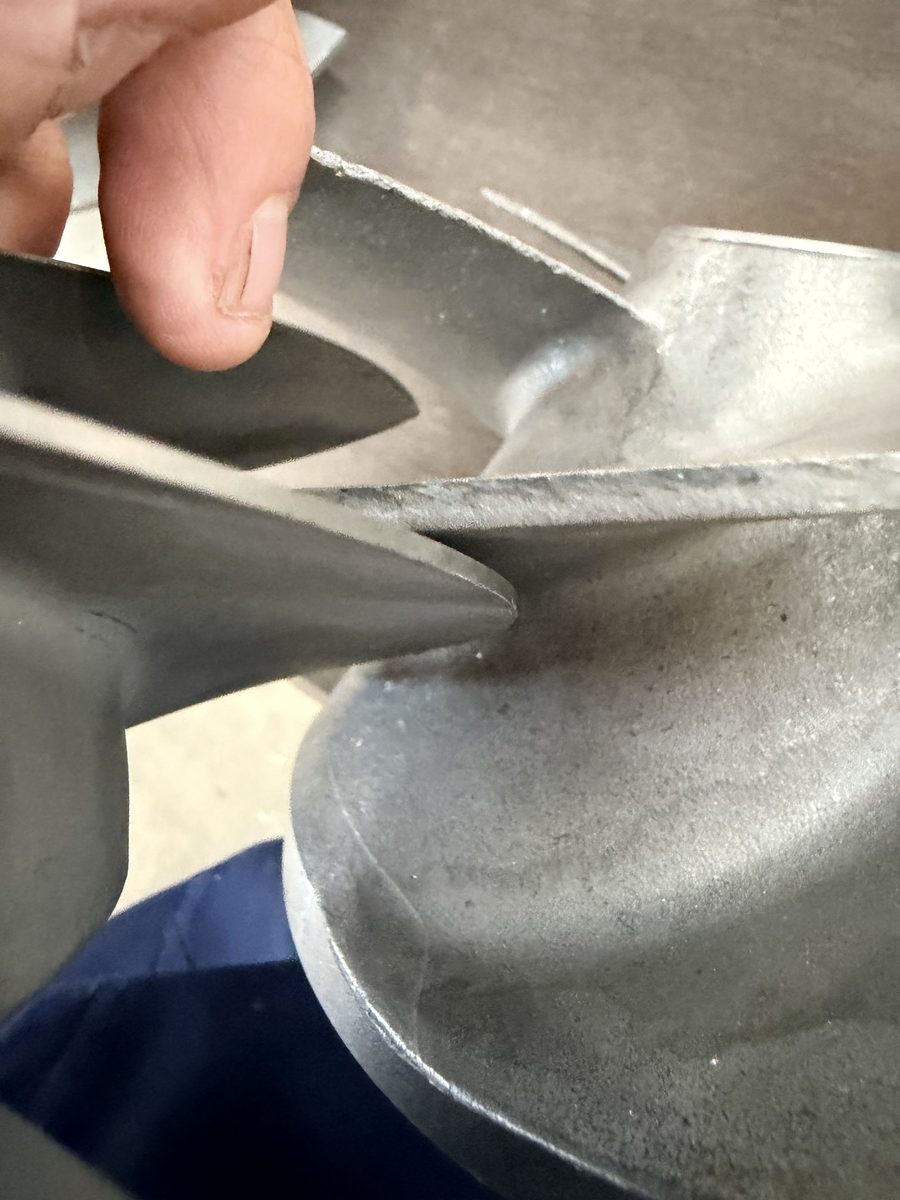
The Rotax 300 jet ski blade, laid edge to edge against the others.
The damage you can’t see: pump clearance
A broken blade is the obvious problem. The quiet one is clearance.
A jet pump runs with a very tight gap between the tips of the impeller blades and the wear ring, the liner that surrounds the impeller. That gap can be just a few thousandths of an inch, and it’s what forces water through the impeller instead of letting it slip around the blades.
Every rock and every handful of sand that passes through works on two surfaces at once. It nicks the blade edges, and it sands away the wear ring. The gap opens up.
As that gap grows, more water leaks back around the blade tips instead of getting accelerated out the nozzle.
Smaller, high-RPM pumps tend to be the most sensitive to this. When the clearances are tight to begin with and the blades are thin, even minor damage shows up in how the boat drives. A pump built for open water and three feet of depth was never meant to live with that. It’s the wrong formula for a rocky river.
Horsepower is only half the conversation
It’s easy to shop by the number on the cowling. But horsepower is only potential. The pump is what converts it into something you can feel.
You can bolt all the horsepower in the world to a boat. If the pump can’t turn that power into efficient thrust, you’ve paid for performance you’ll never use. And if the pump degrades quickly in the conditions you actually run in, the boat you bought isn’t the boat you’ll be driving two seasons from now.
Why we’re particular about what goes in a Banshee
We build boats for demanding shallow-water conditions. Rock, gravel, skinny water, heavy loads: that’s the design brief, not the exception.
So when we choose the jet pumps and power packages we offer, we’re not just looking at peak numbers. We’re asking a longer question: how does this pump perform brand new, and how does it perform after just a few trips of real river running, doing what a jet boat is built to do?
Answer that for our application and the formula for long-term shallow-water performance is clear: large, heavy-duty impellers with thick blades, in pumps built to move serious water volume. Durability, reliability, and consistent performance over time matter to us as much as top speed, because those are the things you actually live with.
Your turn
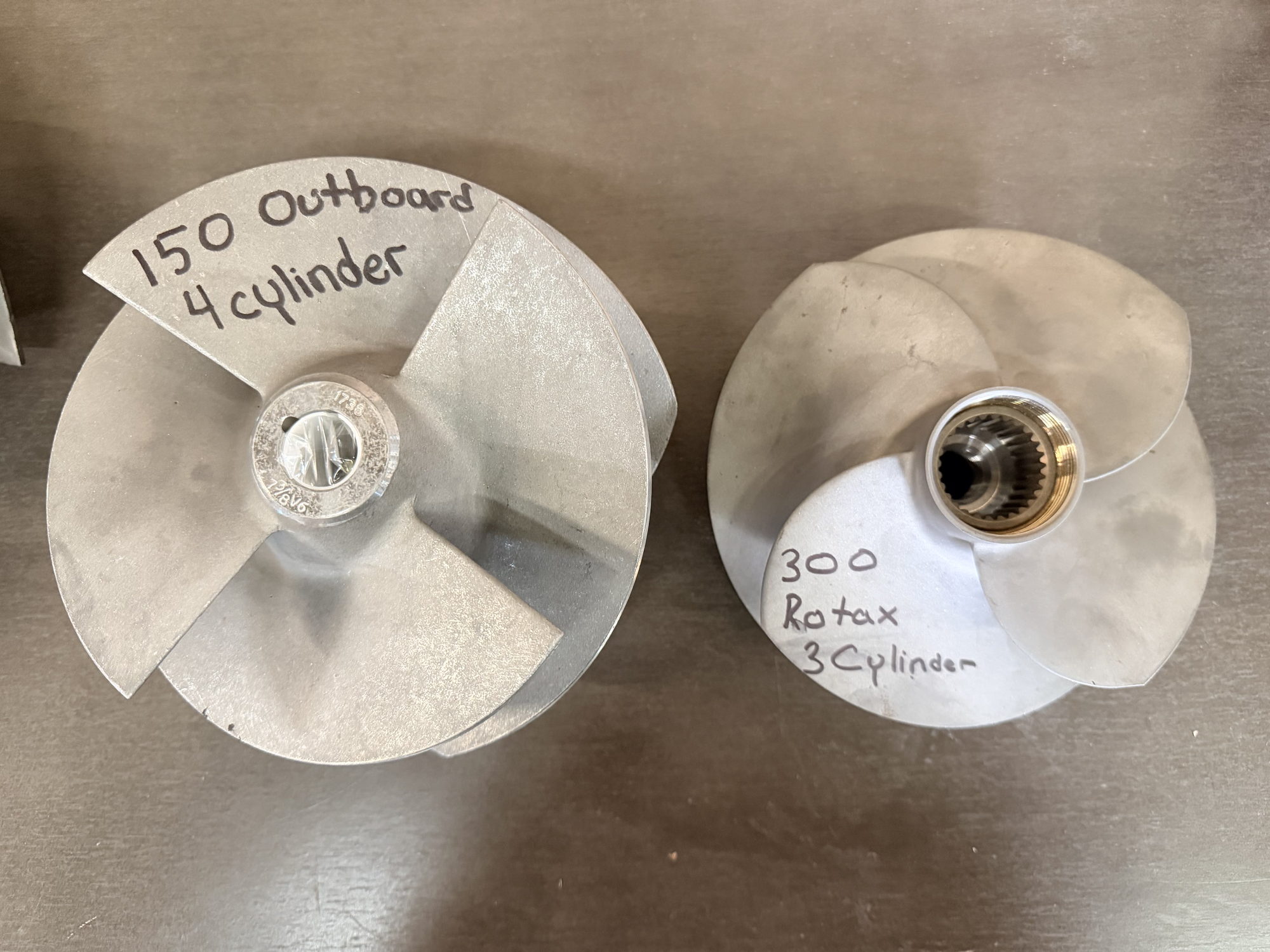
Take another look at the five impellers. Compare diameter, blade thickness, and how much material backs each blade.
Which impeller would you trust most in a rocky river? Which would you trust least? Which one is the right formula for the water you run?
Choose wisely.